



While much of New York City was busy prepping for the impending snowstorm late last month, some thirty or so life-maxxing champions spent the sunny day attending the Tusk & Quill 2026 Winter Seminar: in the morning, ‘How the News Changed’ and ‘Tech Policy Lecture x Debate Workshop’ in the afternoon.
The sessions built upon T&Q’s exploration of how we experience and navigate the effects of the modern ‘attention economy,’ the subject of our recently published collection, Life in the Scroll Age (also our first ever print product!).
How the News Changed
It’s fairly evident, even from popular political discourse if not dutiful self-examination, that how we relate to the news has changed significantly over the past couple of decades. Questions of objectivity, trust, and polarization are at the very surface of our perceptions of news media today.
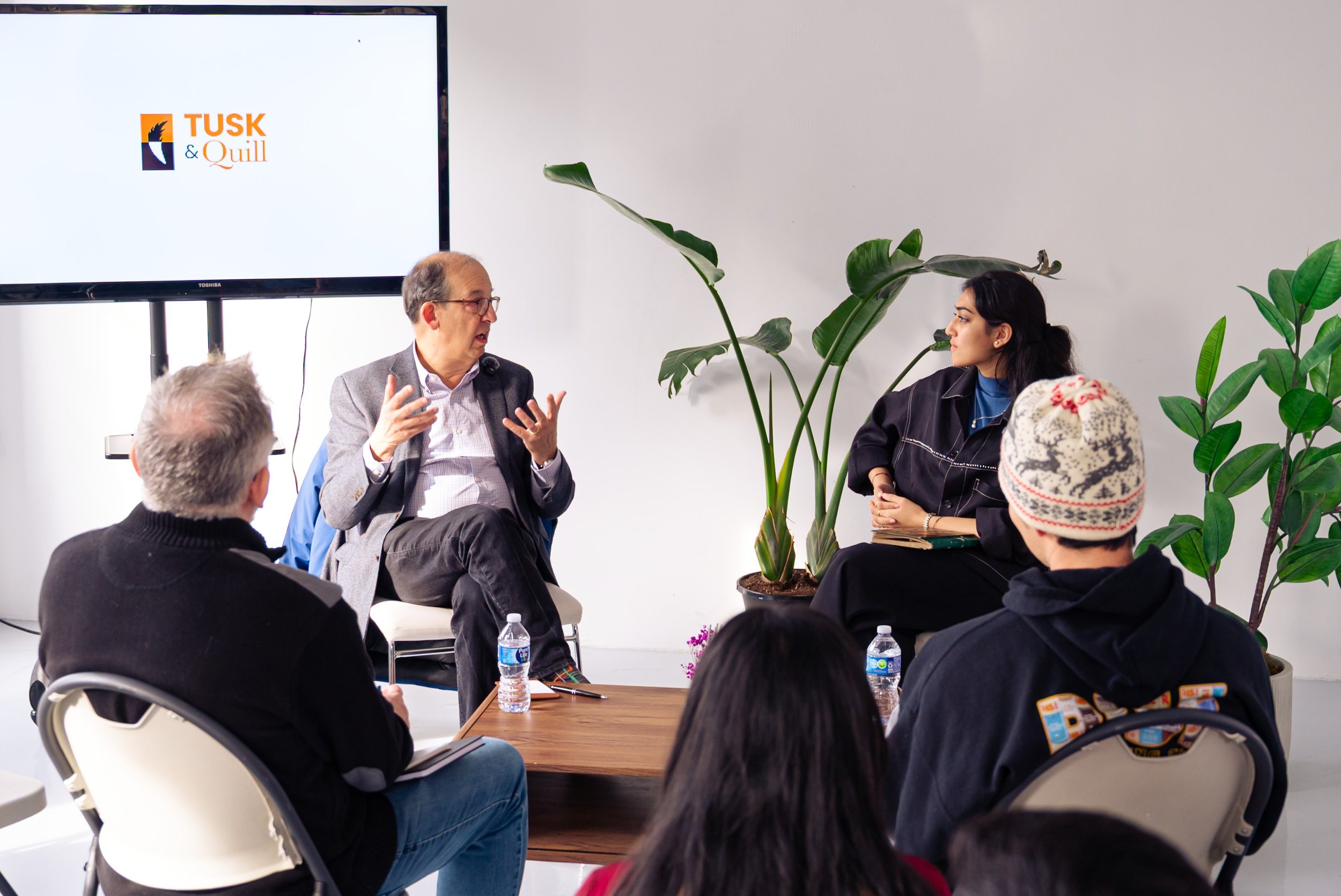
Our Q&A with Dick Tofel, an industry veteran and former president of ProPublica, sought to take a step back from our feelings about the current state of news media, to first understand how and why American news may have evolved over the last few decades. We wanted to hear the insider’s perspective.
Our Content Director, Nimayi, started the session off with a quick first-principles brief on the role of the press and the economic and social pressures the industry is constantly wrestling with. Dick Tofel then took the stage for Q&A, which I had the pleasure of moderating.
A key insight from our discussion Dick was the shrinking importance of ad revenue to traditional media. Internet platforms like Google, Facebook, and others have turned advertising into a precise science. Through those platforms, companies are able to understand the RoI on their ad spend in granular detail. This has funneled marketing spend away from traditional news media who used to depend on that as a key revenue source.
In the face of shrinking ad revenue, subscriptions have become an even bigger portion of the news industries’ financial performance. Dick suggests that this makes editorial teams even more beholden to the biases and prejudices of their audience, less willing to challenge deeply held beliefs for fear of a sudden collapse in subscriptions.
Readers’ preferences have also meaningfully evolved. Dick pointed out the dramatic rise in consumption of opinion writing, for example – a trend which I think is a second order effect of the commodification of attention, i.e., a growing appetite for pre-assembled, spoon-fed, ready-to-deploy information. Not that it’s wrong or weak to read others’ opinions, but the overwhelming preference for it is suspect. Certainly, I’ve caught myself reading an opinion and then, when a related conversation arises, conveniently echoing it without much thought of my own.
During open discussion afterwards, I heard people talk about their go-to platforms for hyperlocal news, the difficulty of conducting cross-political party conversations these days, and how readers brand themselves through their choice of news source (in turn, how the news sources become bound to those brands).
Tech Policy Lecture x Debate Workshop
Our second session centered on the inevitability of viewpoint diversity and how to handle it skillfully.
It’s not easy; diversity tends towards conflict, because it causes us to confront our self-perception and the associated emotions.
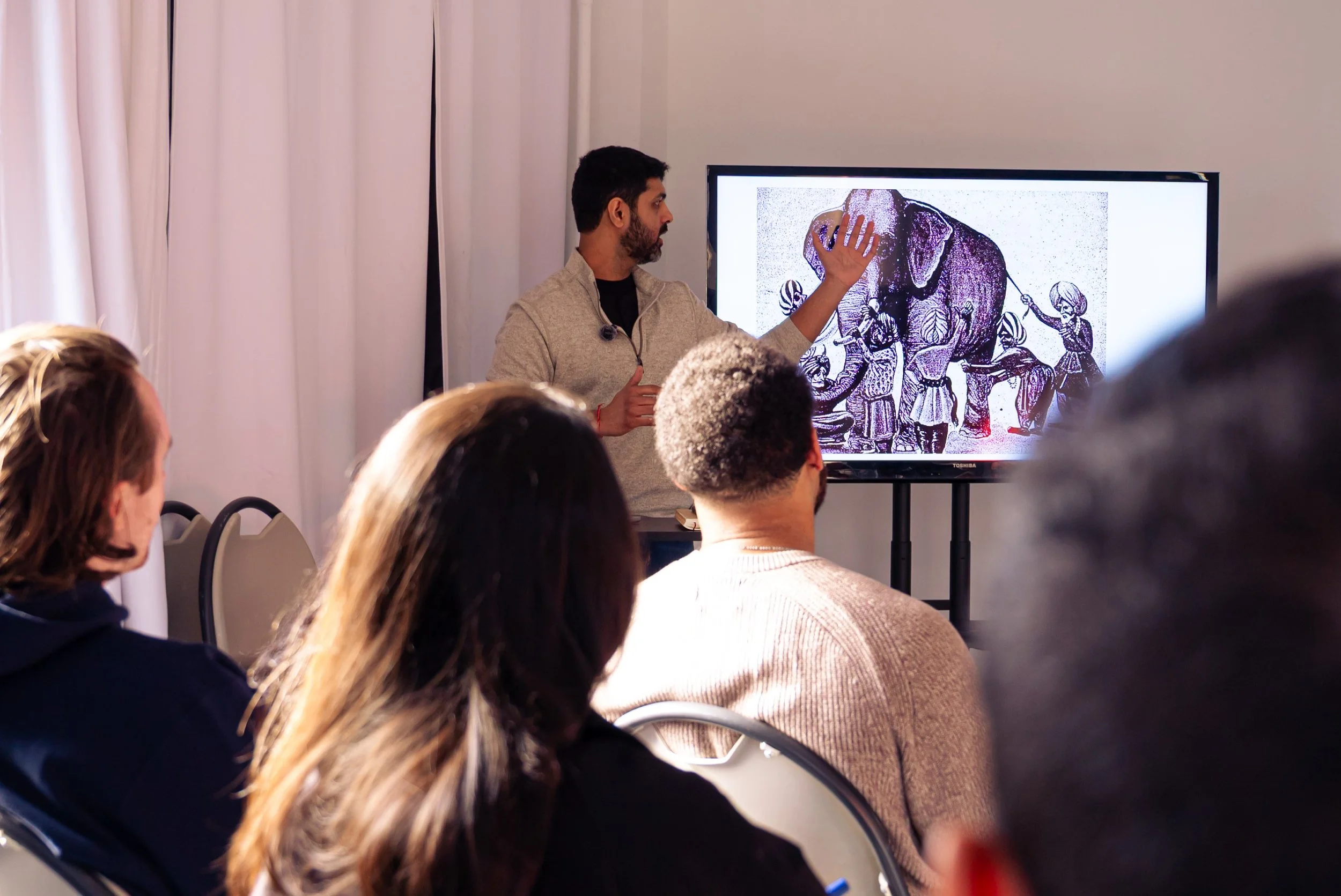
We began the session with a short exercise demonstrating the challenge of thoughtfully translating across worldviews. Between two people, each person is likely to have a different concept map, or a specific way in which facts and values are arranged to shape their view of the world.
We often insist on drawing from our own concepts and values when we describe an opinion or phenomenon to another person. What we find is that they either fully relate or can’t relate at all. Nuance and true constructive discussion comes from the effort to connect elements of one concept map to the other, whether that effort is made by the speaker, the listener, or ideally both.
At Tusk & Quill, we embed that effort – that is, to empathize with and contextualize within a differing worldview – into our editorial process for arguments presented within our Discourse segment. We call it earning the ‘license to argue.’ It makes arguments more sincere, constructive and rigorous.
Later in the session, we welcomed guest speaker Matt Hawes of ex/ante to present an argument, keeping with our Life in the Scroll Age theme and practicing earning the license to argue.
As an investment firm, ex/ante focuses on funding technologies that promote human agency in the face of growing risks to individual freedom from centralized technology systems–think Big Tech, centralized government agencies, etc.
So we asked Matt to begin his presentation by defending those very large, centralized technology systems. What value do they provide society? Are centralized systems always dangerous?
Once he had proven an ability to argue from an opposing viewpoint, he then made his case for decentralized systems of data collection, and the importance of more readily accessible privacy settings and fully customizable data utilization settings.
The crux of his argument was that, while mass surveillance and data utilization can generate a deeper understanding of our behaviors and create services that are well-fit to our preferences, they can also in turn shape our preferences and guide our behaviors – the impact of this capability is something we should take very seriously. He proposed that we should be able to determine if, when and how data is collected and its analyses are deployed.
Following Matt’s presentation and some Q&A with the audience, Nimayi led us through a group exercise to practice some of the building block skills needed to handle viewpoint diversity well, using related tech policy topics as the subjects of our practice discussions.
Stay Tuned!
We plan to do many more events like these in the coming months, which embody and enable us to practice the virtues that motivate Tusk & Quill’s segments.
Please do share the word, take a look at our Life in the Scroll Age collection, and share our content on social media. We hope to see you or hear from you soon!
Cheers,
Natasha